
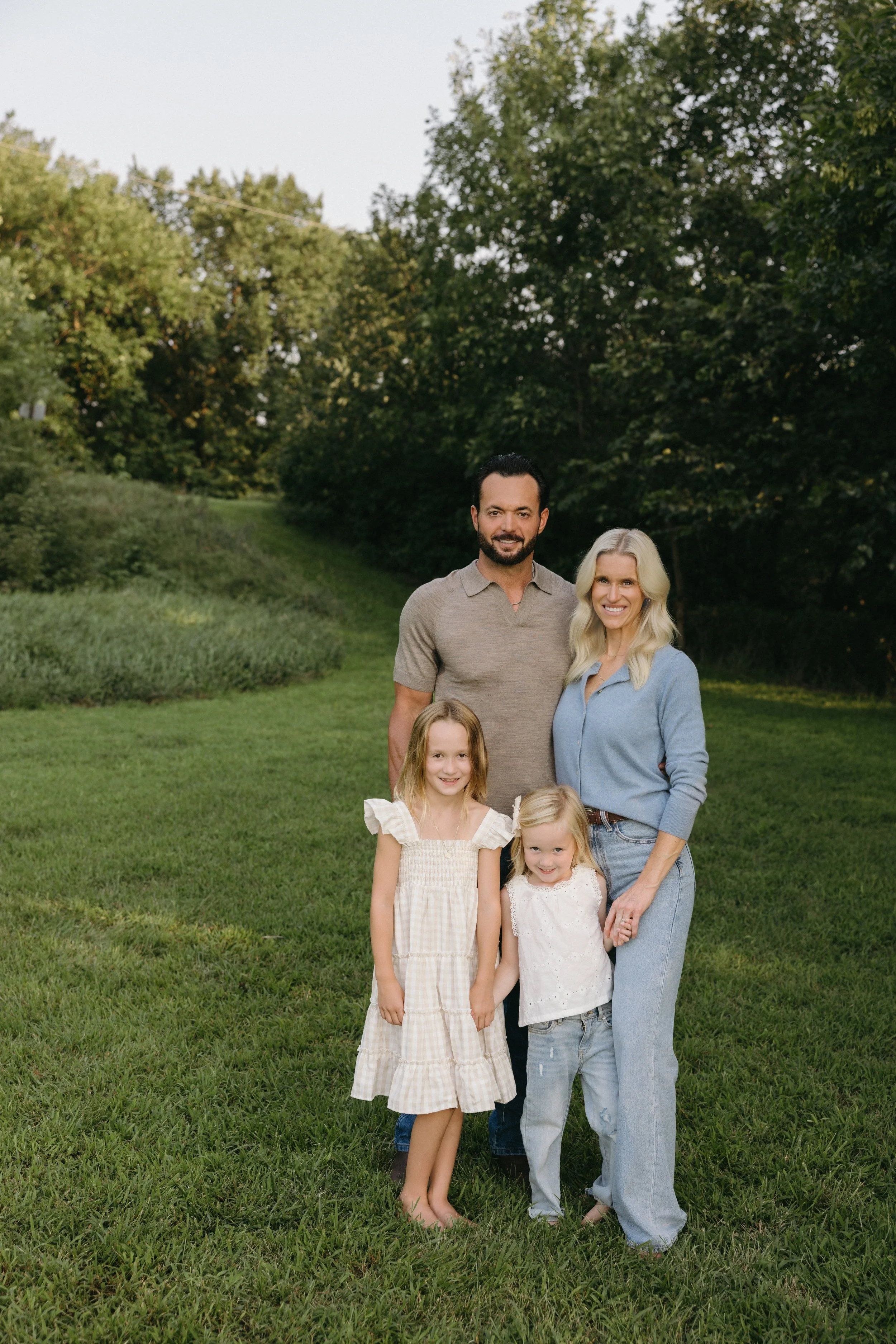
Brandon & Katelyn Cheek
Legacy House didn’t begin as a business. It began inside our own home. We’re Brandon and Katelyn Cheek—husband and wife, parents, entrepreneurs, and two people whose family was deeply impacted by addiction. Over the years, addiction brought consequences and circumstances into our lives we never imagined we would face: rehabs, infertility, losing a business, jail, divorce, Brandon losing custody of his children, bankruptcy, infidelity, suicidal thoughts, broken trust, damaged relationships, and seasons where simply surviving felt like the only option.
We share these parts of our story not to glorify them, but because we believe there is power in being honest about what life can really look like when addiction takes hold. We never want someone reading our story to believe they are too far gone, too broken, or too ashamed to rebuild. Through recovery, faith, difficult decisions, discipline, forgiveness, and the complete rebuilding of our lives, God began restoring what addiction had tried to destroy. Along the way, we learned that addiction is rarely an individual battle. The person struggling may be at the center of it, but the fear, resentment, codependency, instability, broken trust, and consequences reach everyone who loves them.
We also learned that sobriety alone wasn’t the finish line. Real transformation meant rebuilding our relationship with God, our health, our marriage, our family, our identity, our purpose, and the legacy we wanted to leave our children. That journey became Legacy House—a mentorship program created to help men, women, and families break free from addiction, rebuild on a foundation of faith, strengthen their health and family, live with purpose, and build a lasting family legacy.
Brandon — The Addict
For Brandon, addiction became more than something he struggled with—it slowly took over nearly every part of his life. What began as a way to escape eventually became the very thing he could no longer escape from. Addiction cost him relationships, opportunities, stability, freedom, businesses, time with his children, and pieces of himself he wasn’t sure he would ever get back. His story included multiple rehabs, relapses, jail, financial destruction, broken trust, and consequences that reached far beyond him.
But getting sober was only the beginning. Brandon eventually realized that removing drugs and alcohol would never be enough if he didn’t rebuild the man underneath the addiction. Recovery required him to face himself honestly, take responsibility for the damage he had caused, rebuild his relationship with God, restore his physical and mental health, develop discipline where chaos had once lived, and become intentional about the husband, father, and man he wanted to become.
Today, Brandon uses those experiences to walk alongside people who are still in the fight, those who are newly sober, and those who have been sober for years but know there is more life left to build. He doesn’t believe your worst decisions have to become your identity. He believes recovery can be the beginning of a life defined not by what almost destroyed you, but by what you choose to build afterward.
Katelyn — The Codependant
For Katelyn, addiction looked completely different. She wasn’t the one using, but addiction still consumed nearly every part of her life. Loving someone in active addiction meant living in a constant cycle of fear, uncertainty, anger, hope, disappointment, and survival. Somewhere along the way, Brandon’s addiction became the center of her world too. She learned to anticipate problems before they happened, fix what she could, cover what needed covering, hold the family together, and carry responsibilities that were never meant to be hers alone.
But Brandon getting sober was only the beginning of Katelyn’s healing too. She eventually realized that his recovery could not become her responsibility—and that she had recovery work of her own to do. Years of living inside addiction had created patterns of codependency, control, resentment, fear, and losing herself in the process of trying to save someone she loved. Healing required Katelyn to surrender control, establish healthy boundaries, rebuild trust, strengthen her relationship with God, confront her own wounds, rediscover who she was outside of the chaos, and learn that loving someone does not mean losing yourself.
Today, Katelyn uses those experiences to walk alongside spouses, partners, women, and family members who are living through addiction or trying to rebuild after it. She understands what it feels like to love someone desperately while also feeling exhausted, angry, afraid, and completely alone. She believes recovery belongs to the entire family—not only the person struggling with addiction. Because when one person begins to heal, the people who love them deserve the opportunity to heal too. Addiction may affect an entire family, but healing can too.